
1880–1901
Victorian
Ornate cast brass, multi-arm chandeliers, and gas-to-electric transition fixtures.
History
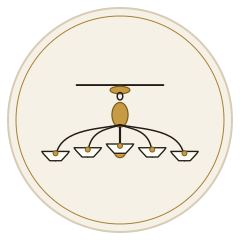
Victorian-era lighting sits at the hinge between gas and electricity. Through the 1880s most parlor fixtures still burned gas, and the ornate brass chandeliers of the period — often called gasoliers — were designed first to carry fuel, not current. As electric service spread into well-to-do homes in the 1890s, manufacturers produced combination fixtures wired for both, so a household could light a room by gas one night and by bulb the next.
Stylistically the period prized abundance. Arms were cast in deep relief with scrollwork, acanthus leaves, and beaded edges; canopies and ceiling plates were embossed; and finishes ran to polished or lacquered brass, sometimes with japanned or 'gilt' accents. Shades were typically etched, frosted, or cased glass, and on gas fixtures they pointed upward to vent the flame.
Because so many Victorian fixtures were later converted, originals in unaltered condition are prized by collectors. Reproductions remain widely available, which makes period-correct detailing — the arm profile, the shade fitter size, the gas-key stems — the surest way to tell an authentic fixture from a later copy.
Common forms
- Two- to six-arm chandeliers (gasoliers)
- Combination gas-and-electric fixtures
- Single and double wall brackets (sconces)
- Newel-post and hall fixtures
From the historical record
Period objects and interiors
The illustrations above make the forms easier to read. These documented objects and rooms show how the same visual language appeared in surviving fixtures and period use.

19th century
Four-tier Victorian brass chandelier
Multiple descending tiers, dense brass ornament, and a strongly vertical silhouette turn the fixture into architecture at the center of the room.
Photograph by Jenifergamber, John Thompson House. CC BY 3.0. Source at Wikimedia Commons.
Shop victorian fixtures
All fixtures →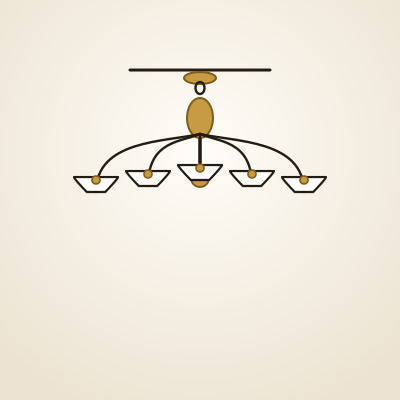 Amazon pick
Chandelier · Inspired by c. 1895
Victorian-Style Five-Light Chandelier
A dark-bronze, five-light reproduction with the ornament and generous scale of a late-Victorian parlor chandelier.
Amazon pickChandelier · Victorian-inspired
French Empire Brass-and-Crystal Chandelier
An eight-light brushed-brass chandelier with crystal swags and the formal silhouette of a French Empire revival fixture.
As an Amazon Associate, Old House Lights earns from qualifying purchases. Prices and availability are shown on Amazon and may change.