
1885–1915
Gas & Early Electric
Combination fixtures, gas keys, and exposed-bulb pioneers of the wired house.
History
For roughly three decades the American home was lit by two systems at once. Combination fixtures — wired for electricity on one set of arms and plumbed for gas on another — let households hedge against unreliable early electric service. These 'gas-type' fixtures are a category unto themselves and are among the most frequently identified pieces in collector forums.
Early electric arms were often left deliberately spare to show off the novelty of the bulb. Carbon-filament lamps glowed dim and warm, so fixtures of this period favored downward-facing shades and exposed bulbs rather than the bright, shaded uplighting that gas required. The hardware vocabulary — paddle gas keys, knurled shade rings, brass-armored cloth wiring — is the clearest tell of the era.
Identifying a gas-versus-electric arm comes down to the tip: a gas arm ends in a threaded gas cock and points its shade up to vent heat; an electric arm ends in a socket and points its shade down. Mixed fixtures carry both, and reading them correctly is the single most useful skill for dating a turn-of-the-century light.
Common forms
- Combination chandeliers (gas + electric)
- Single exposed-bulb pendants on stems or chain
- Converted gasoliers
- Early porcelain and brass wall brackets
Identification guide
Combination fixture or converted gasolier?
Compare arm ends, gas controls, shade direction, piping, and wiring against documented examples from the Library of Congress and National Park Service.
Read the identification guide →From the historical record
Period objects and interiors
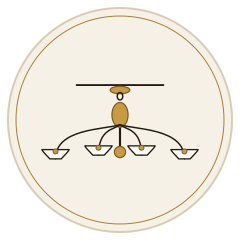
The illustrations above make the forms easier to read. These documented objects and rooms show how the same visual language appeared in surviving fixtures and period use.
documented after 1933
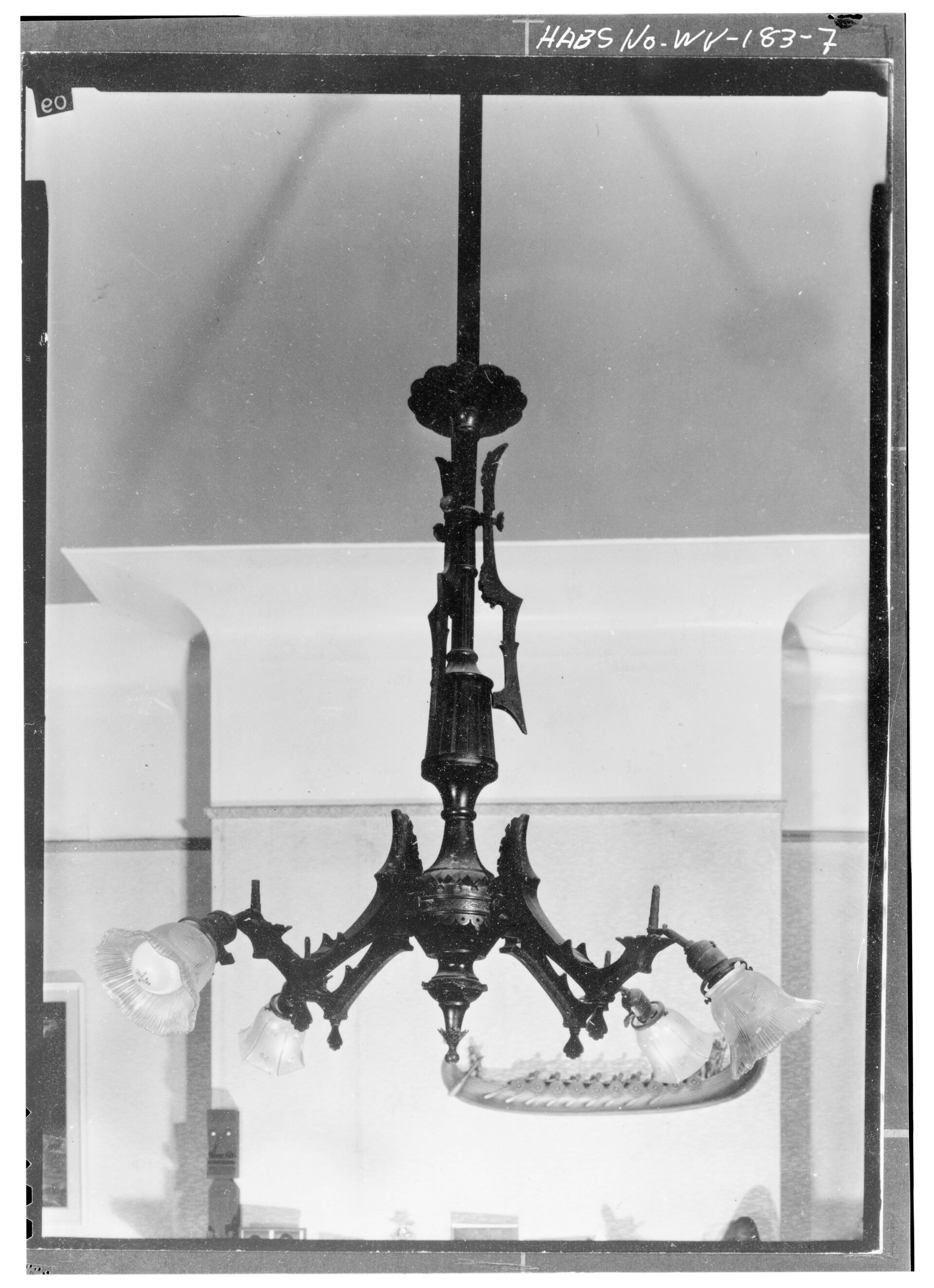
Electrified gas chandelier, Irwin–Brues House
The surviving gas-era body and later electric shades make the transition in lighting technology visible in a single fixture.
Historic American Buildings Survey, Library of Congress. Public domain. Source at Wikimedia Commons.

c. 1890s
Natchez Hotel dining room with combination chandeliers
This room view shows combination gas-and-electric fixtures in use, not as isolated museum objects—the old and new systems coexisted over the same dining tables.
Photographer uncredited, via Historic Natchez Foundation. Public domain. Source at Wikimedia Commons.
Catalogs featuring this style
Shop gas & early electric fixtures
All fixtures →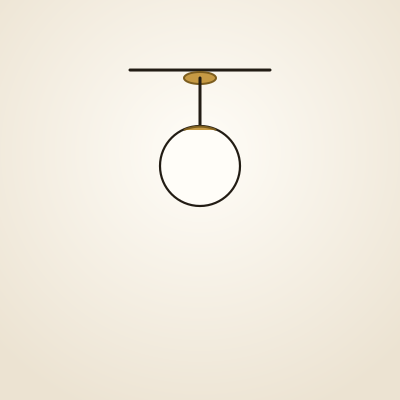 Amazon pick
Utility ceiling light · Early-electric utility form
Glazed-Porcelain Pull-Chain Lampholder
A simple Leviton glazed-porcelain pull-chain lampholder for the closets, basements, and service rooms of an old house.
 Amazon pick
Exterior wall lantern · Gaslight-inspired form
Gas-Light-Style Wall Lantern
A restoration-style wall lantern with seedy glass and the tall, enclosed silhouette of an old gas fixture.
As an Amazon Associate, Old House Lights earns from qualifying purchases. Prices and availability are shown on Amazon and may change.