
Glass and holder field guide
How to measure a glass shade fitter
Measure the outside diameter of the shade’s narrow neck where it enters the holder. Do not measure the shade’s widest body and call that the fitter. Record the holder opening and its screws, clips, or fingers separately; a nominal diameter alone does not prove that two pieces are compatible.
The measurement that matters
Keep four dimensions separate
| Part | Where to measure | Why record it |
|---|---|---|
| Shade neck / lip | Across the outside of the neck or lip that actually enters the holder. | Record the actual glass measurement; the nominal fitter size may be larger. |
| Holder opening | Across the inside opening, without counting projecting screws or clips. | It checks the receiving part instead of assuming the old shade was correct. |
| Shade body | At the widest point of the glass. | It determines clearance and visual scale, not fitter size. |
| Shade height | From the fitter edge to the glass’s lowest or highest point, according to orientation. | It checks bulb, socket, canopy, and ceiling clearance. |
Why the glass may measure under its named size
A nominal fitter size is a size designation, not a promise that the glass neck measures that exact diameter. Adriana’s Specialty Lamp Shades explains that its glass measures smaller than the opening it fits into. Record your actual measurement without rounding it up, then ask the supplier to confirm the intended holder size and neck profile. Do not apply one clearance allowance to every shade.
Measure without loading the glass
Switch off the light and let the glass cool. Support the shade with one hand before loosening retaining hardware. Use calipers if they can touch the glass gently; otherwise measure across the neck with a rigid rule and repeat at a second angle.
Do not force a shade through a holder or use retaining screws to compensate for a visibly wrong fit. If access requires disturbing installed wiring, or if the fixture is heavy or damaged, stop and ask a qualified lighting restorer or electrician to remove it safely.
Diameter is only half the fit
Photograph the neck in profile and record whether it is straight, flared, lipped, grooved, or open-ended. Then note how the holder retains it. Set screws, spring clips, fixed fingers, and maker-specific mechanisms do not engage glass in the same way.
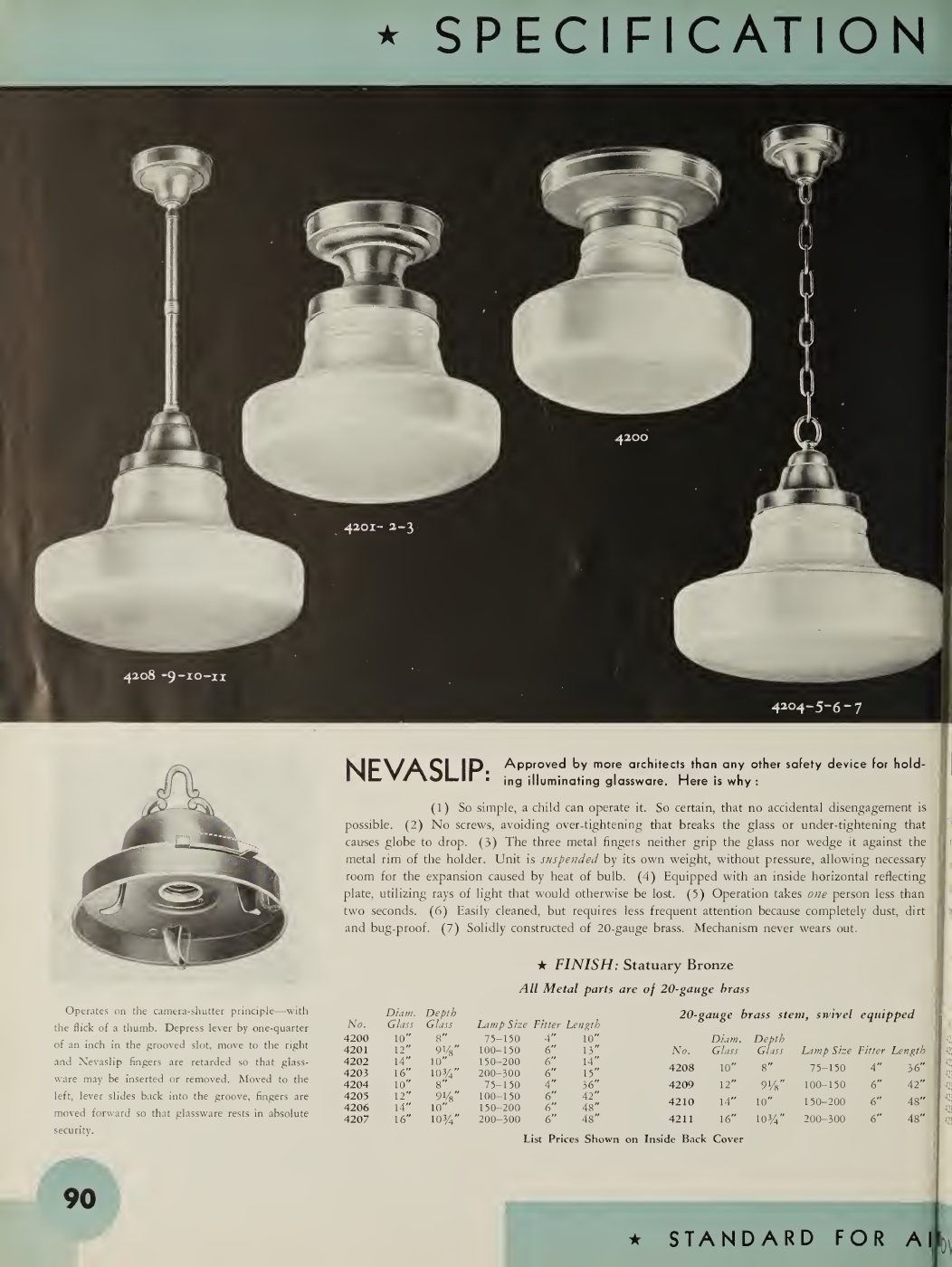
The 1934 Lightolier page below documents the point clearly: its table separates glass diameter and depth from fitter and total length. The illustrated Nevaslip holder used three fingers and a lever-operated retaining action rather than ordinary set screws.
Dated evidence
Historic catalogs treated fitter as its own specification
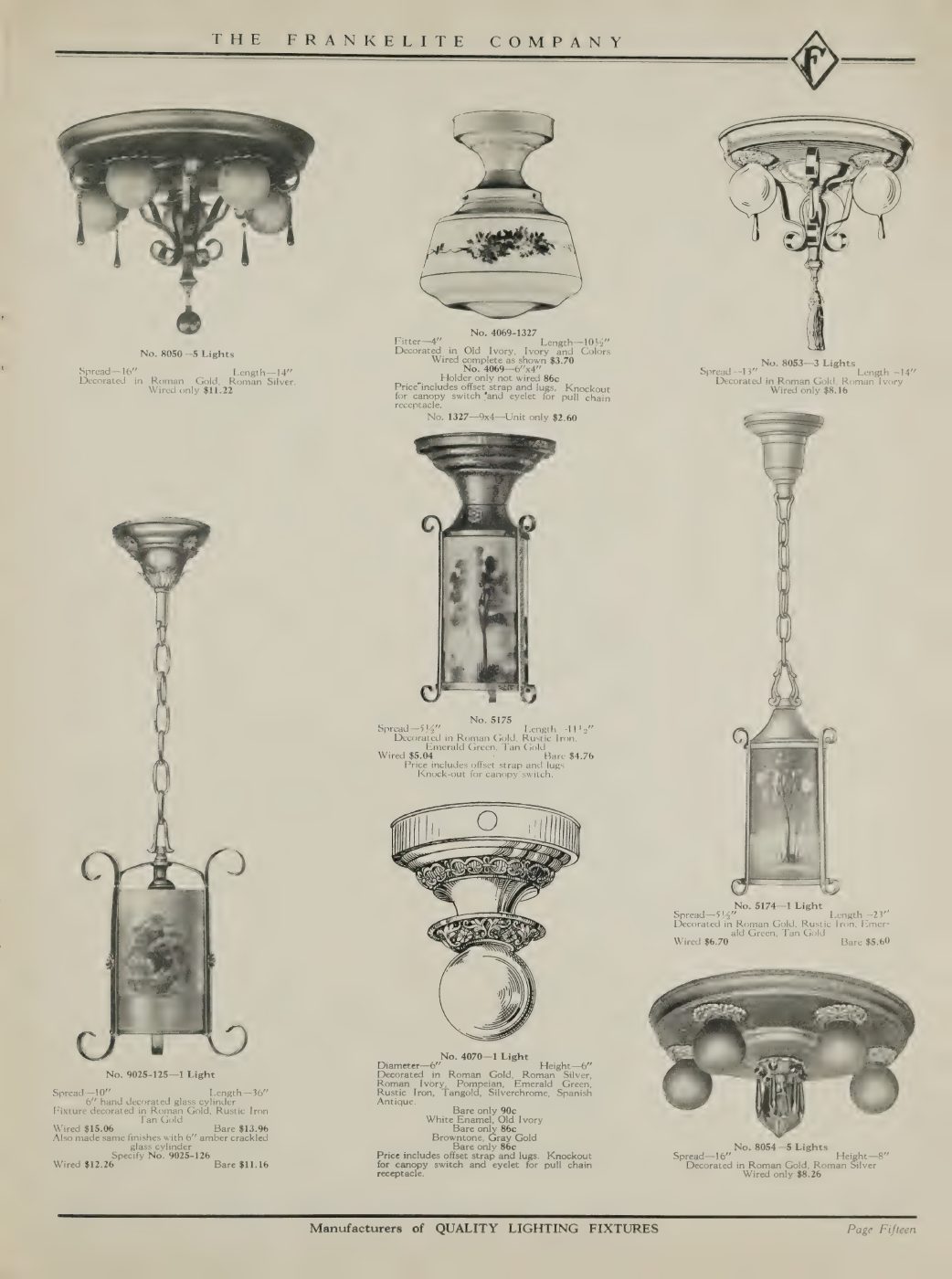
Frankelite, 1926
A four-inch fitter on a compact ceiling fixture
Model 4069-1327 is printed with “Fitter—4,” while its overall length is listed separately. The plate is evidence for that offered model, not a universal size rule.
Open scan page 17 →Lightolier, 1934
Separate specifications for glass and fit
The table separately specifies glass diameter, glass depth, lamp size, fitter, and total length. Its listed fixtures include examples with four-inch fitters and others with six-inch fitters.
Open scan page 94 →A current replacement option
For a confirmed four-inch fitter
This modern opal schoolhouse shade is a useful match only for a compatible four-inch holder. Its listed 8½-inch body diameter is not the fit measurement. Confirm neck profile, height, clearances, current specifications, seller, and availability on Amazon; do not order from the style name alone.
As an Amazon Associate, Old House Lights earns from qualifying purchases. Prices and availability are shown on Amazon and may change.
Research sources
- Frankelite Company, Lighting Equipment of Charm (1926), scan page 17—a four-inch fitter printed separately from fixture length.
- Lightolier Company, Style Book 1934–1935 (1934), scan page 94—glass diameter, glass depth, lamp size, fitter, length, and Nevaslip retaining method.
Both are Avery Architectural and Fine Arts Library copies digitized by Internet Archive for the Building Technology Heritage Library. The Amazon listing is a present-day purchase option, not historical evidence.